PARALLEL TIME
In certain versions of the tale, a trail of breadcrumbs scattered through the forest is replaced by small white stones that reflect the moonlight. Unlike breadcrumbs – fragile markers consumed by animals and weather – the stones remain visible, guiding a path back through unfamiliar terrain. Acts of navigation echo throughout Parallel Time: fragments gathered across time and situated within a landscape shaped by instability and transformation.
For Heide Nord, Kiruna in northern Sweden became both a physical destination and a conceptual threshold. Her engagement with the region began through earlier artistic research connected to Kirunatopia at Kunsthaus Dresden in 2014 and intensified following the 2023 discovery of vast rare earth deposits in the area. Initially, the artist describes her research as a form of disorientation – becoming lost within overlapping histories of mining, environmental change, Sámi resistance, and speculative futures. Gradually, however, a visual language emerged from these scattered materials. Parallel Time unfolds as the first chapter of this ongoing enquiry.
Kiruna itself occupies a paradoxical position. Built around one of the world’s largest iron ore mines and shaped by the state-owned mining company LKAB, the town is physically shifting as excavation causes the ground beneath it to fracture and sink. Entire neighbourhoods are being relocated; streets, houses, and memories are slowly displaced across the Arctic landscape. Beneath the spectacular visibility of the aurora borealis and polar sky lies an infrastructure of extraction, surveillance, logistics, and technological control. At the same time, the surrounding region remains deeply connected to Sámi histories, migration routes, and ecological knowledge, increasingly disrupted by mining, roads, dams, and energy development. Throughout the exhibition, Kiruna is approached not simply as a place or subject but as a site where competing systems intersect without resolution. Painting functions here less as a fixed medium than as a way of orientating within this complexity. Heide Nord brings together surface textures, found materials, weather conditions, and spatial encounters into a visual language that moves between abstraction, documentation, and speculative landscapes.
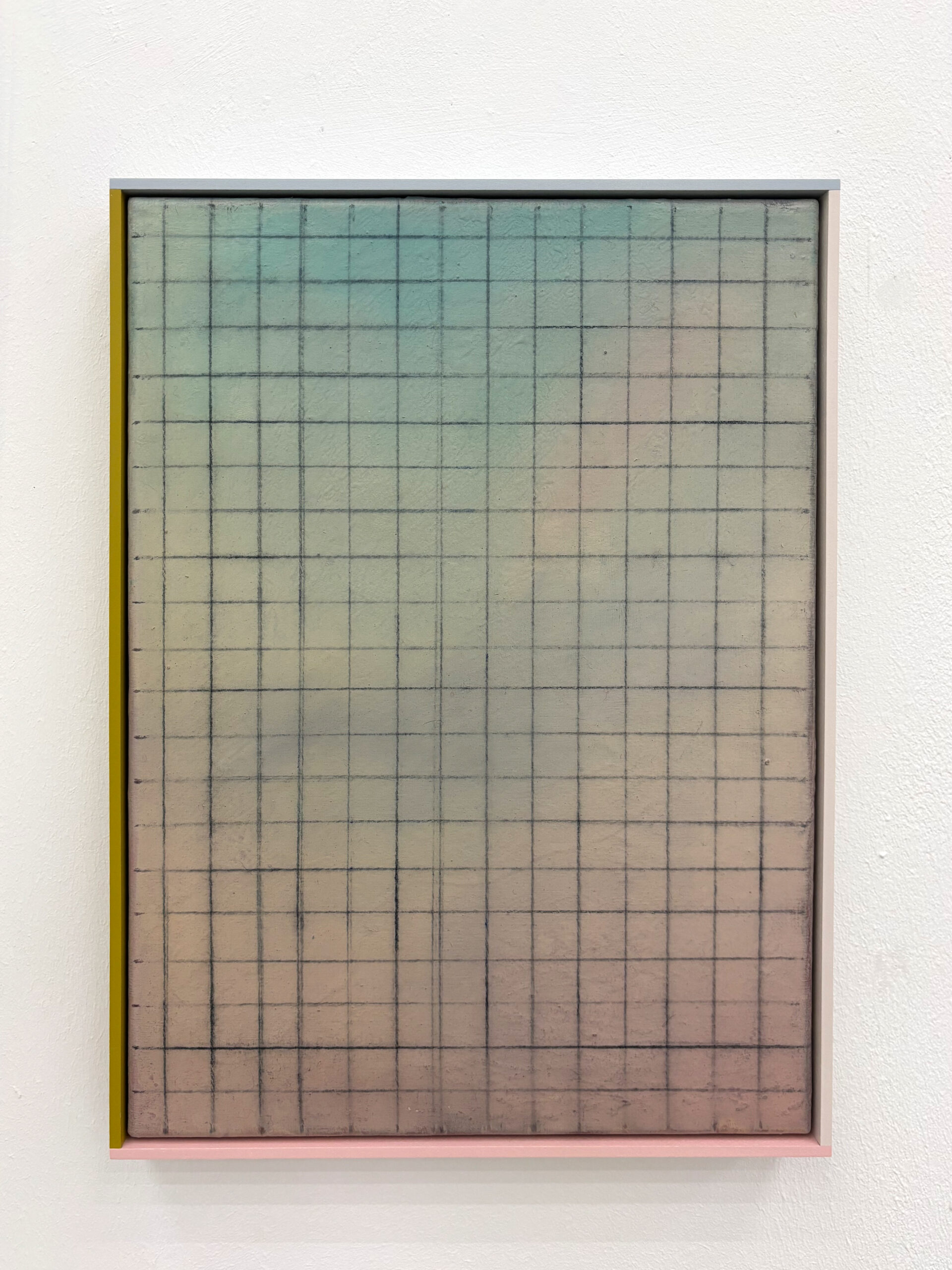
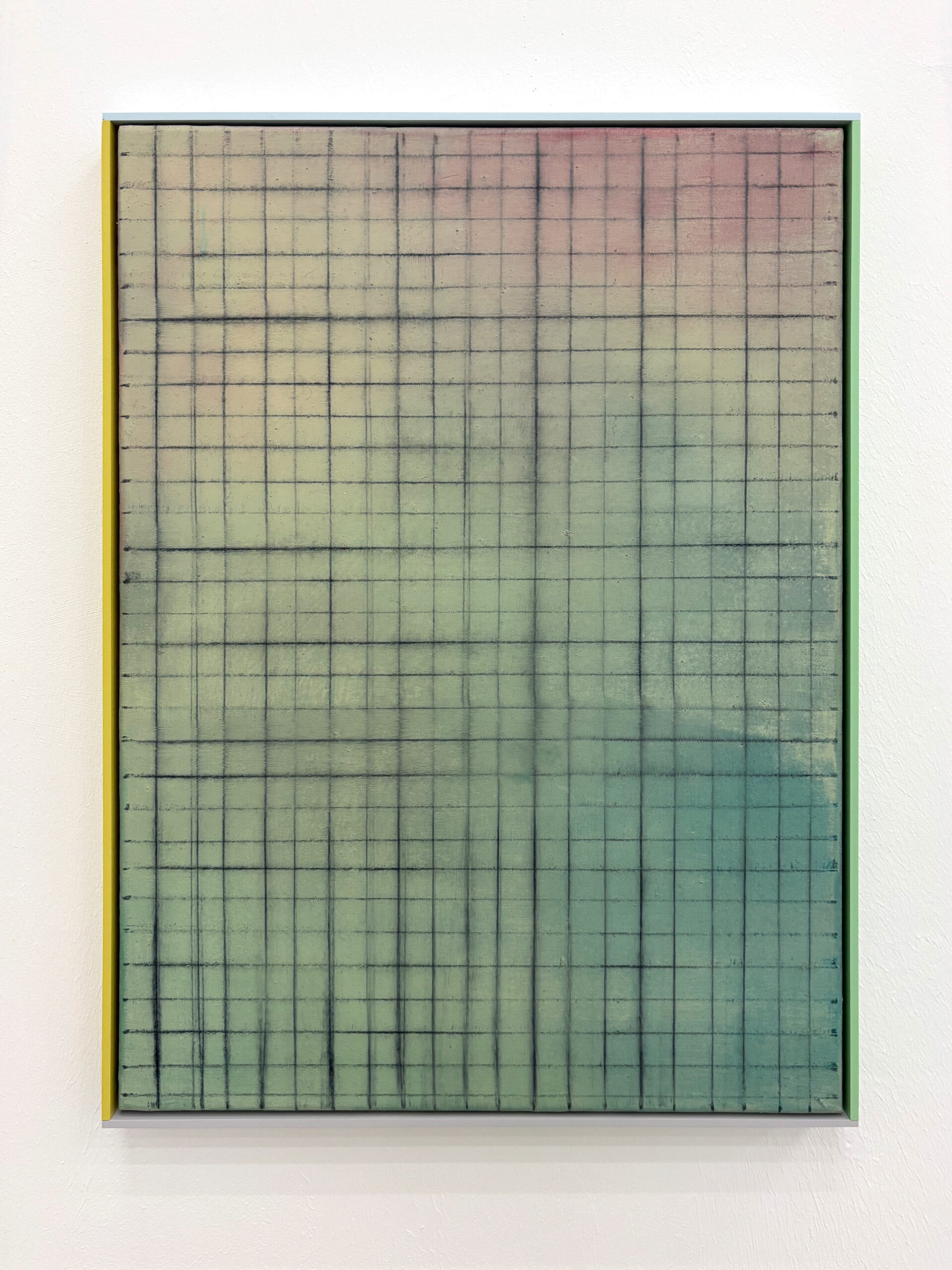
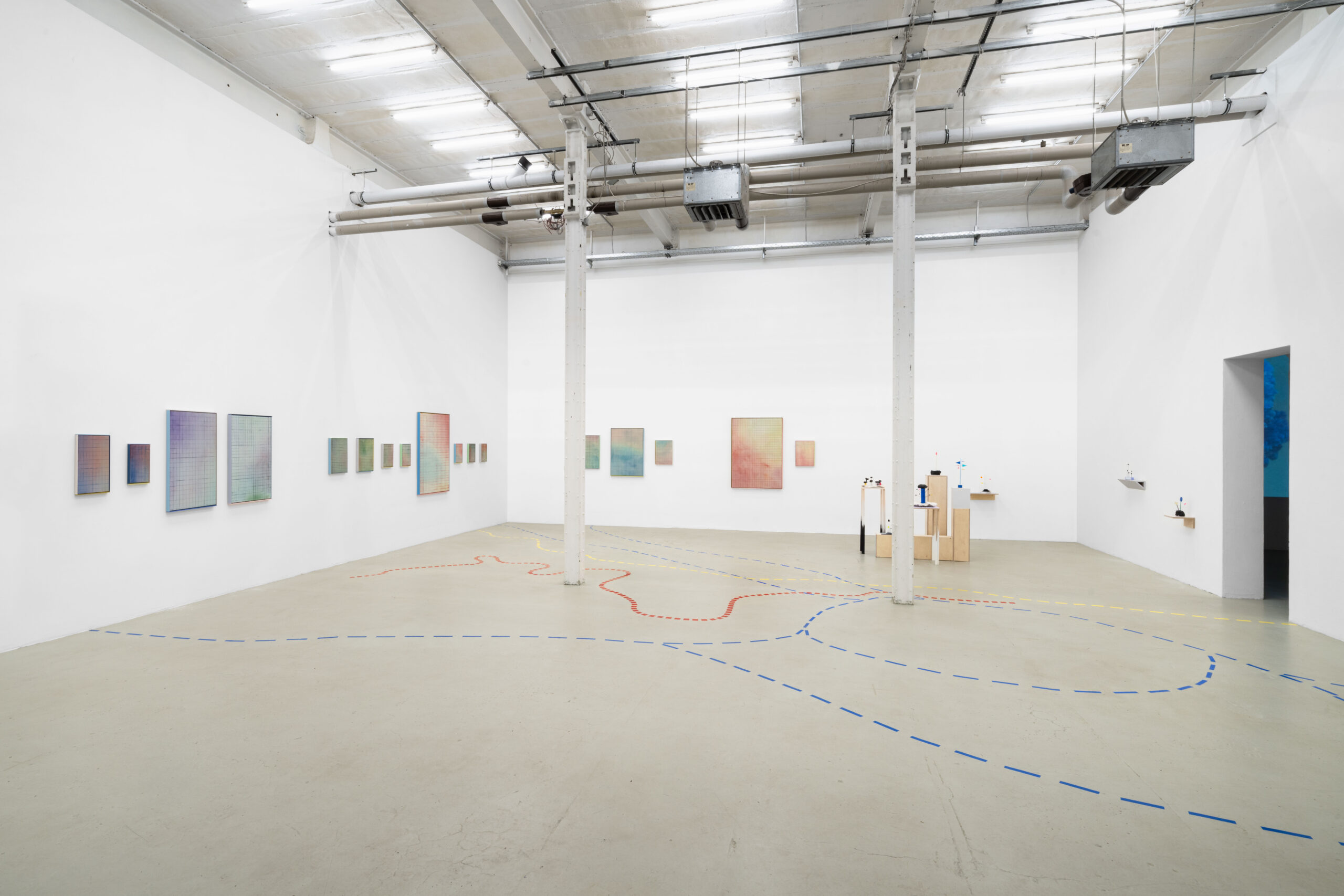
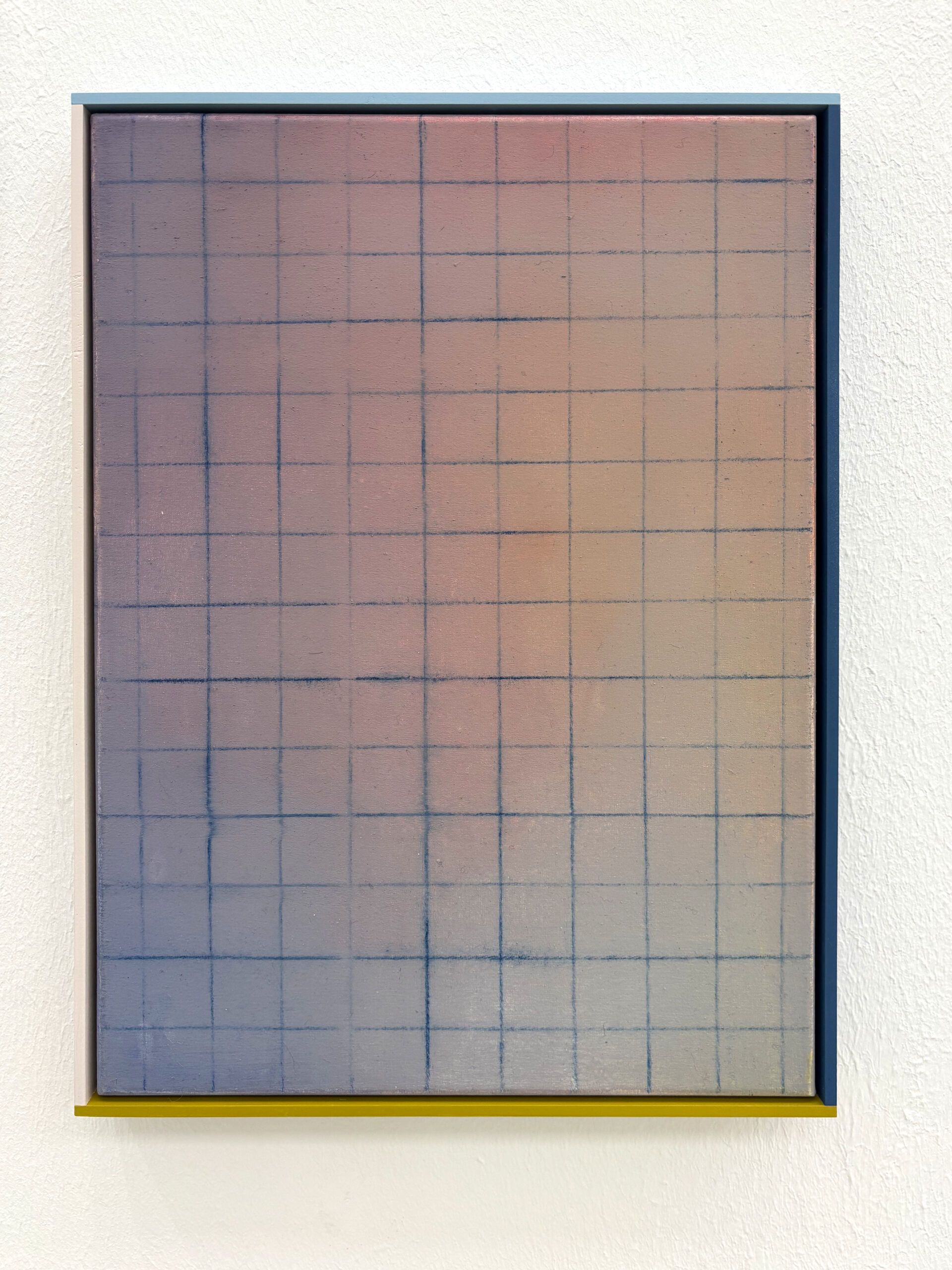
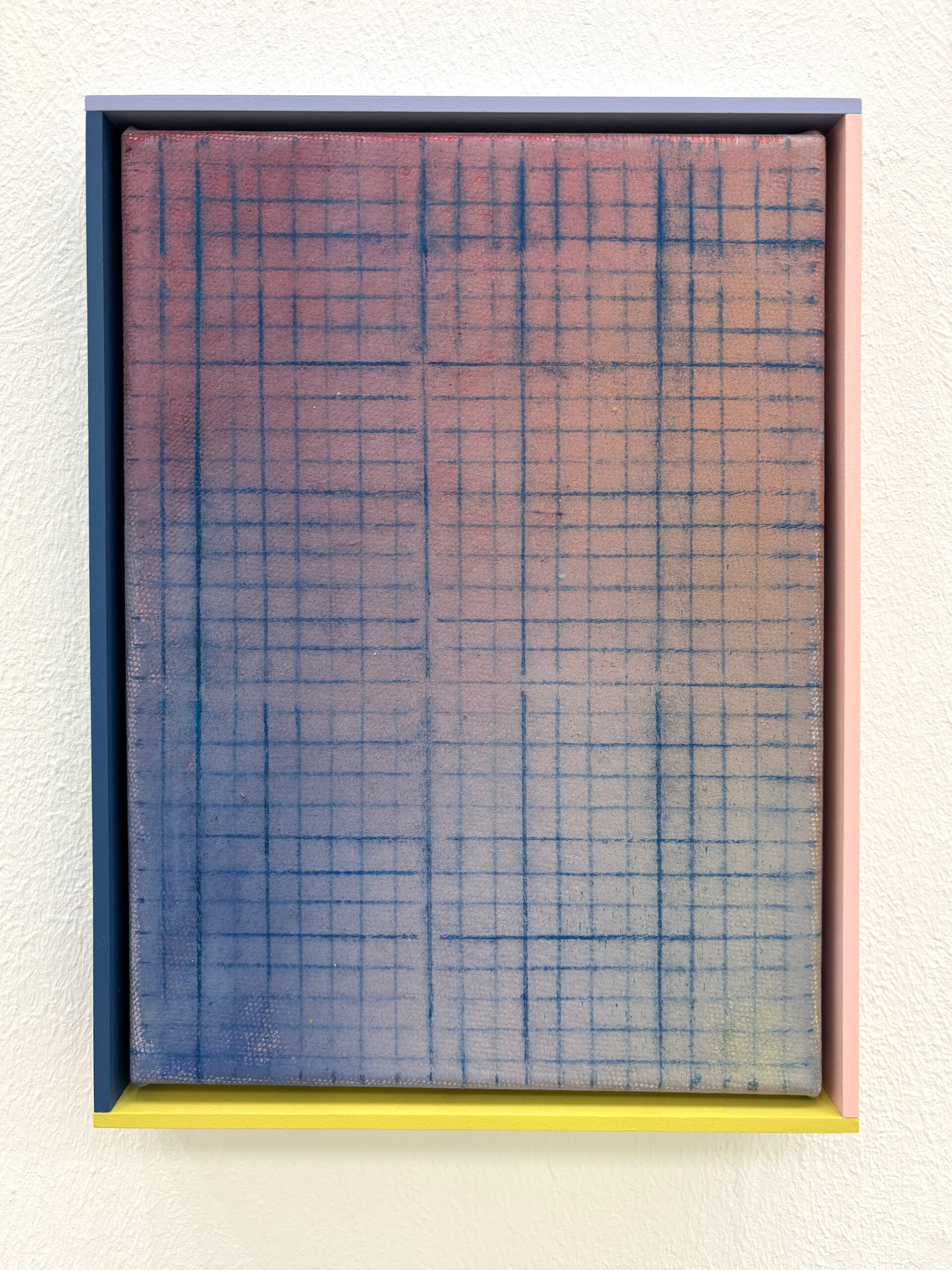
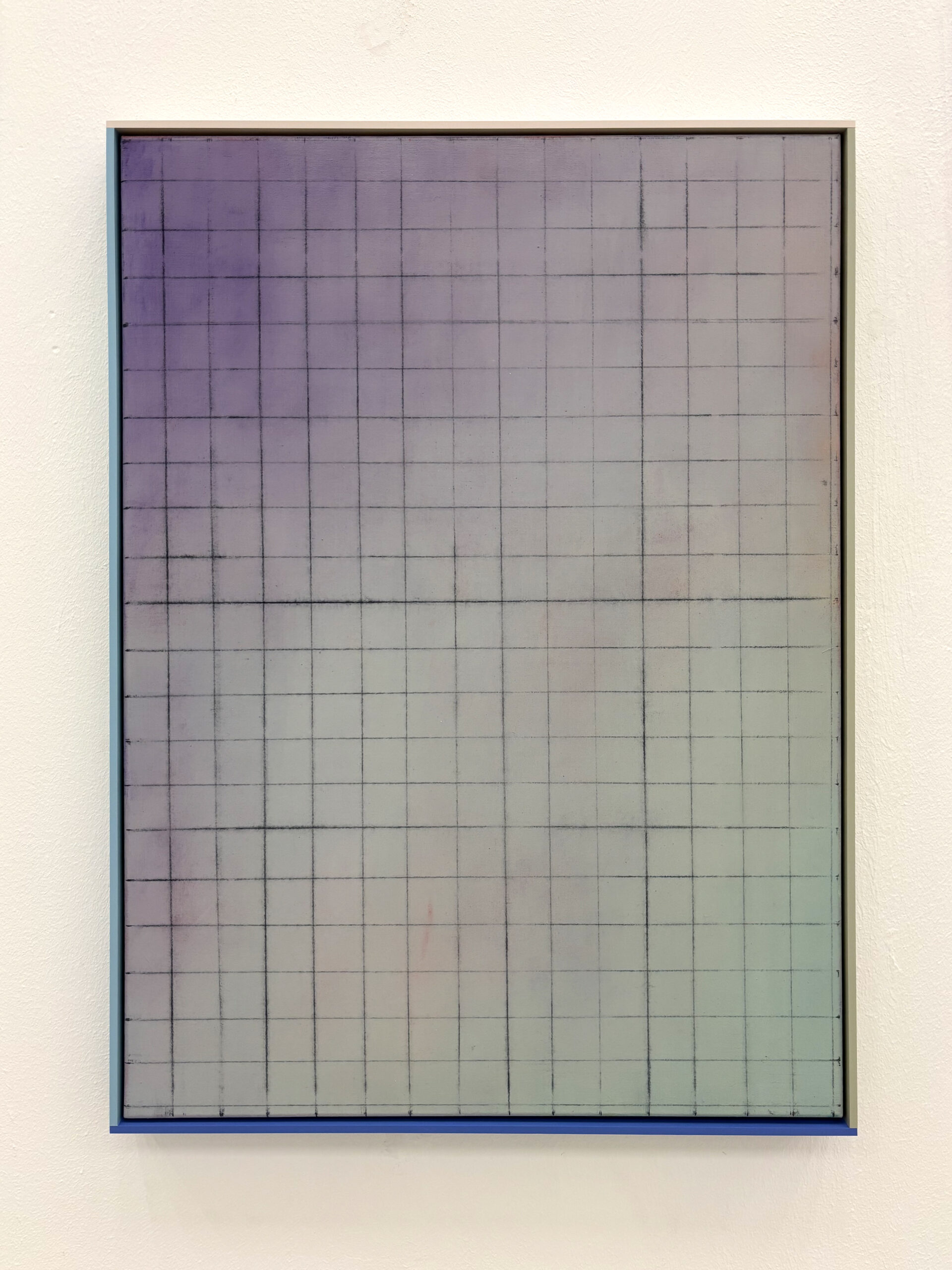
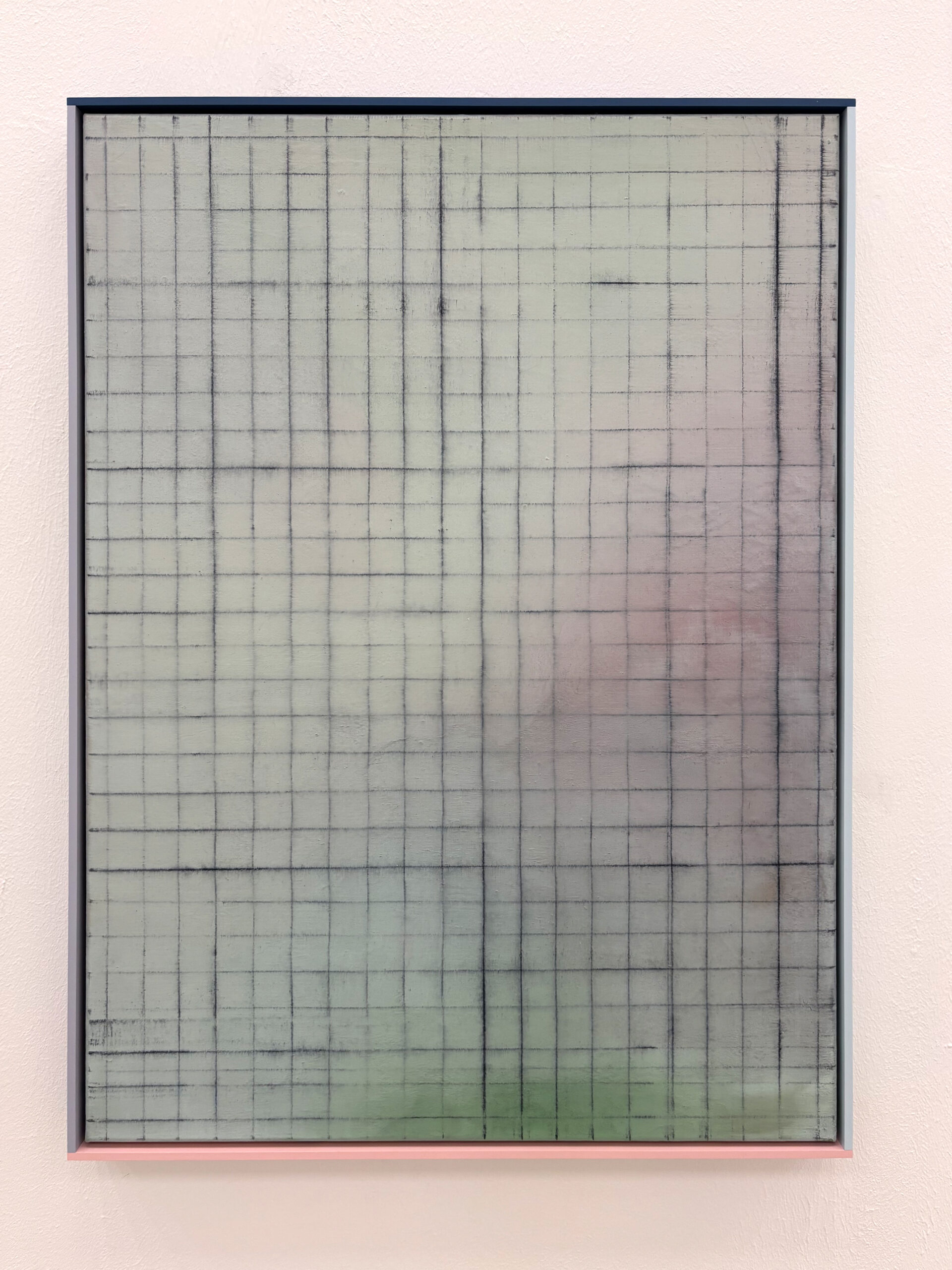
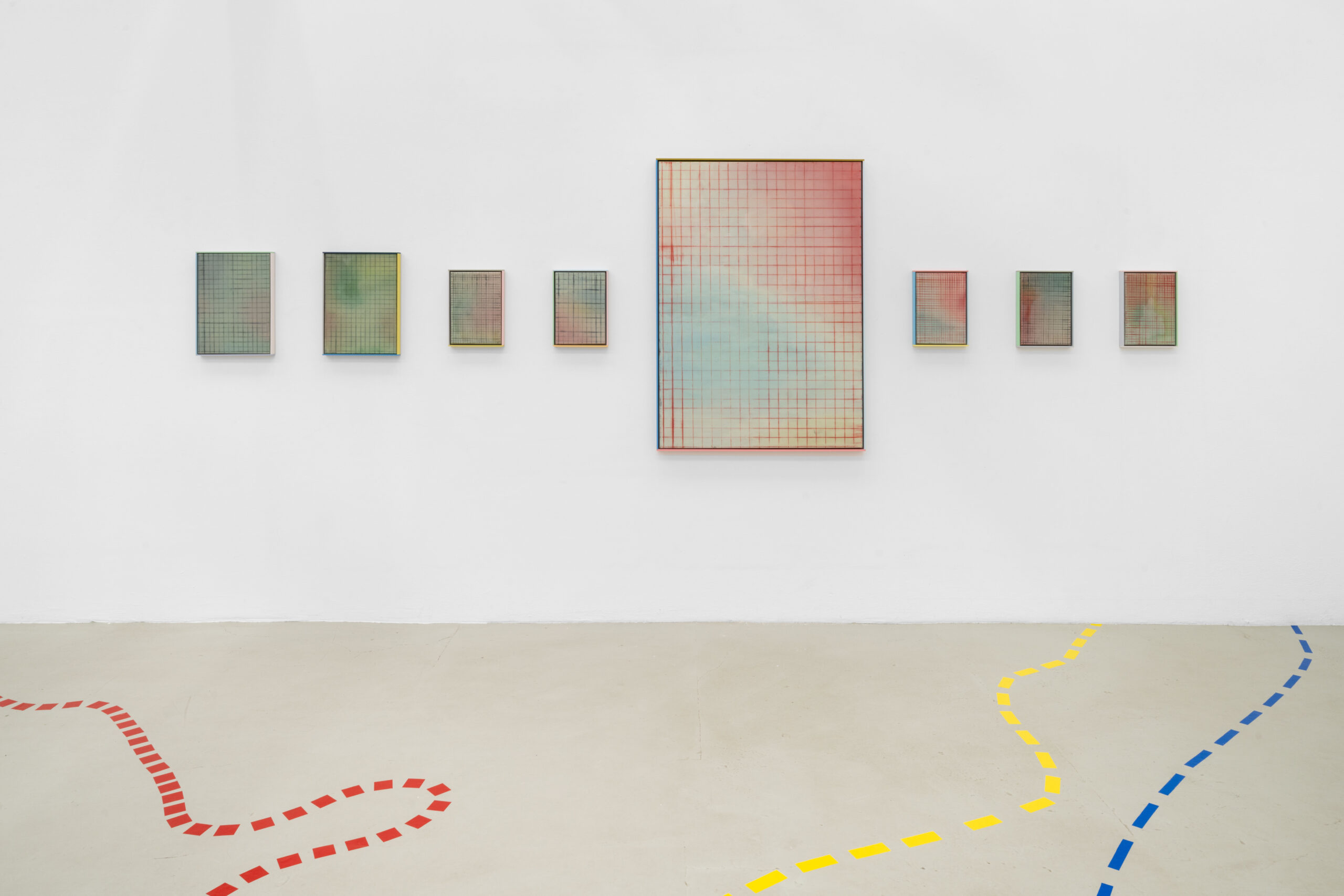
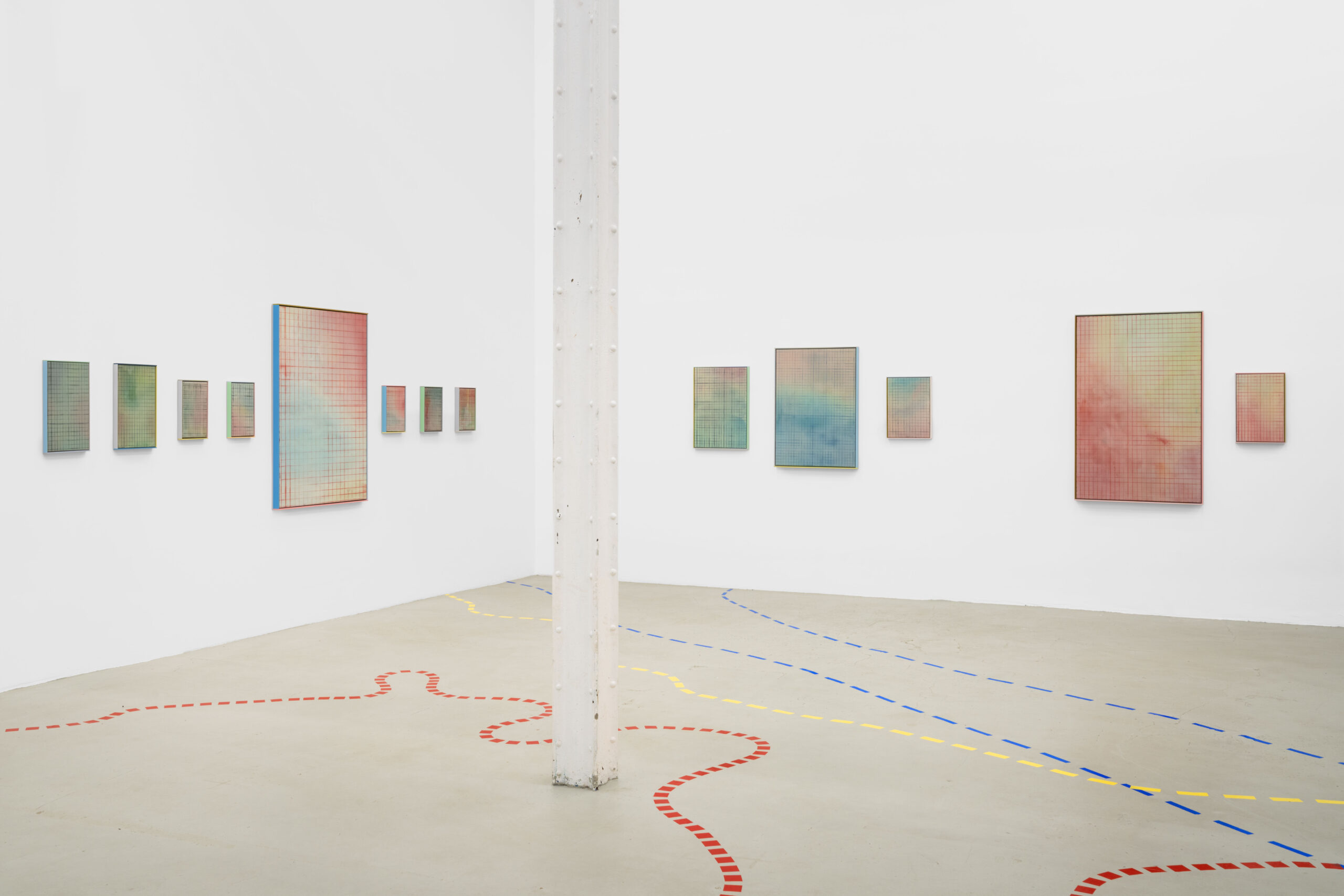
The works drift between scales, from microscopic crystalline growth to remote aerial perspectives, oscillating between intimacy and distance. A recurring set of egg tempera paintings, produced in vertical A-series format, appears throughout the exhibition like dispersed atmospheric signals. Across these surfaces, fog-like fields of luminous colour emerge and recede beneath layered grid structures. The paintings evoke auroral skies, weather maps, or frozen light without settling fully into representation. Their grids suggest systems of mapping, measurement, and containment, while the unstable grounds beneath resist fixed orientation. The works gather traces accumulated through movement across the landscape: fleeting perceptions held temporarily within vivid frames, where atmospheric phenomena encounter structures associated with navigation and control.
This relationship between perception and constraint extends into Heide Nord’s ongoing interest in satellites and remote imaging technologies. During workshops focused on reading satellite data, the artist became fascinated by the strange reversal embedded within satellite vision: humanity observing itself from afar, translating landscapes into abstractions and measurable systems. In Parallel Time, this logic materialises through a series of satellite images transferred onto metal sheets. From Kiruna, Heide Nord used satellites passing overhead to capture both the terrain beneath her feet and disturbances within the atmosphere above – dust particles and drifting cloud systems. At times fractured by static, blurred through repetition, or interrupted by technological noise, the images expose the instability hidden beneath supposedly objective systems of observation. Printed onto cold grey metal, the works make the remote tactile; surfaces become marked by transference, interference, delay, and the weight of translation.
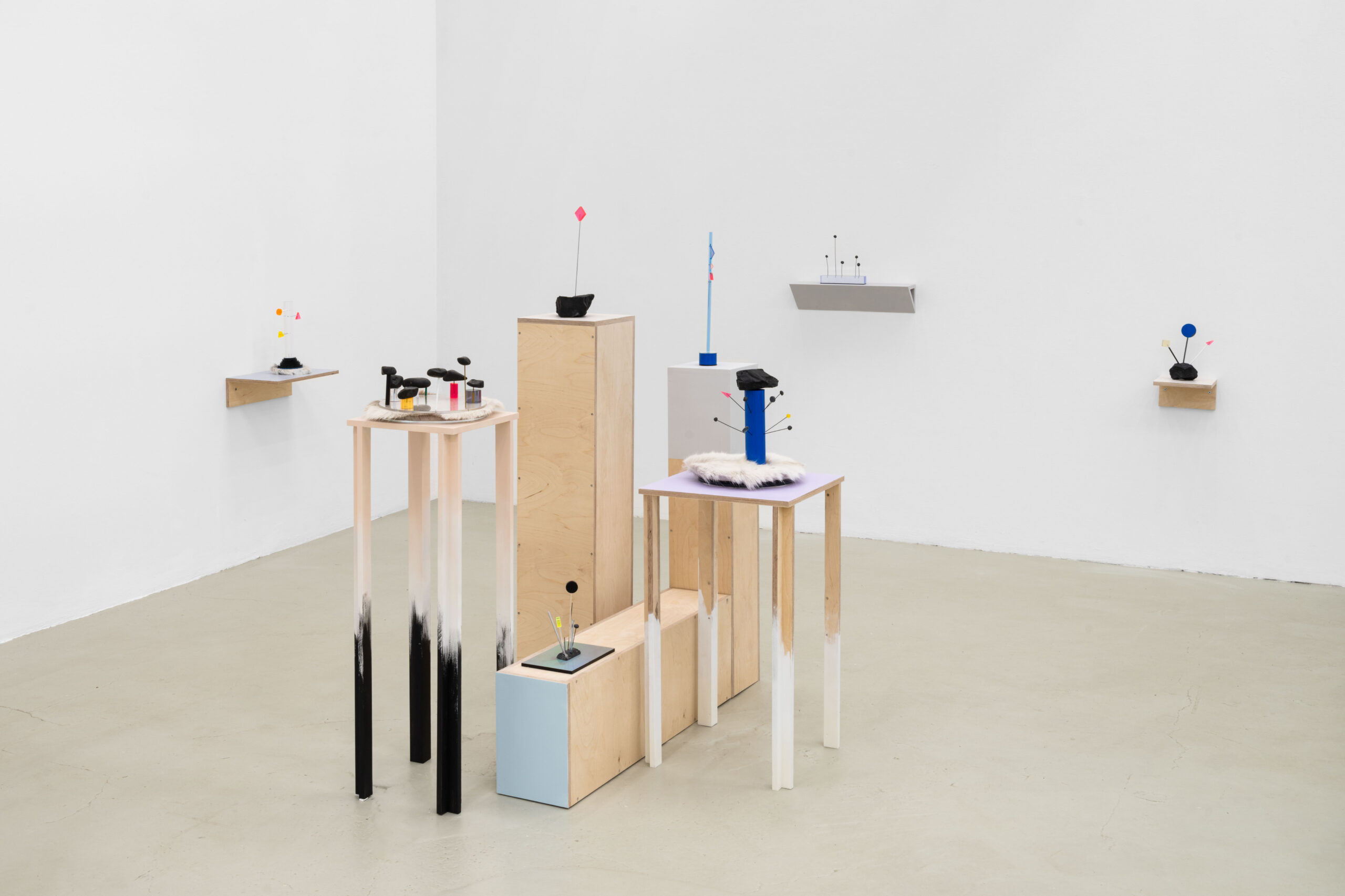
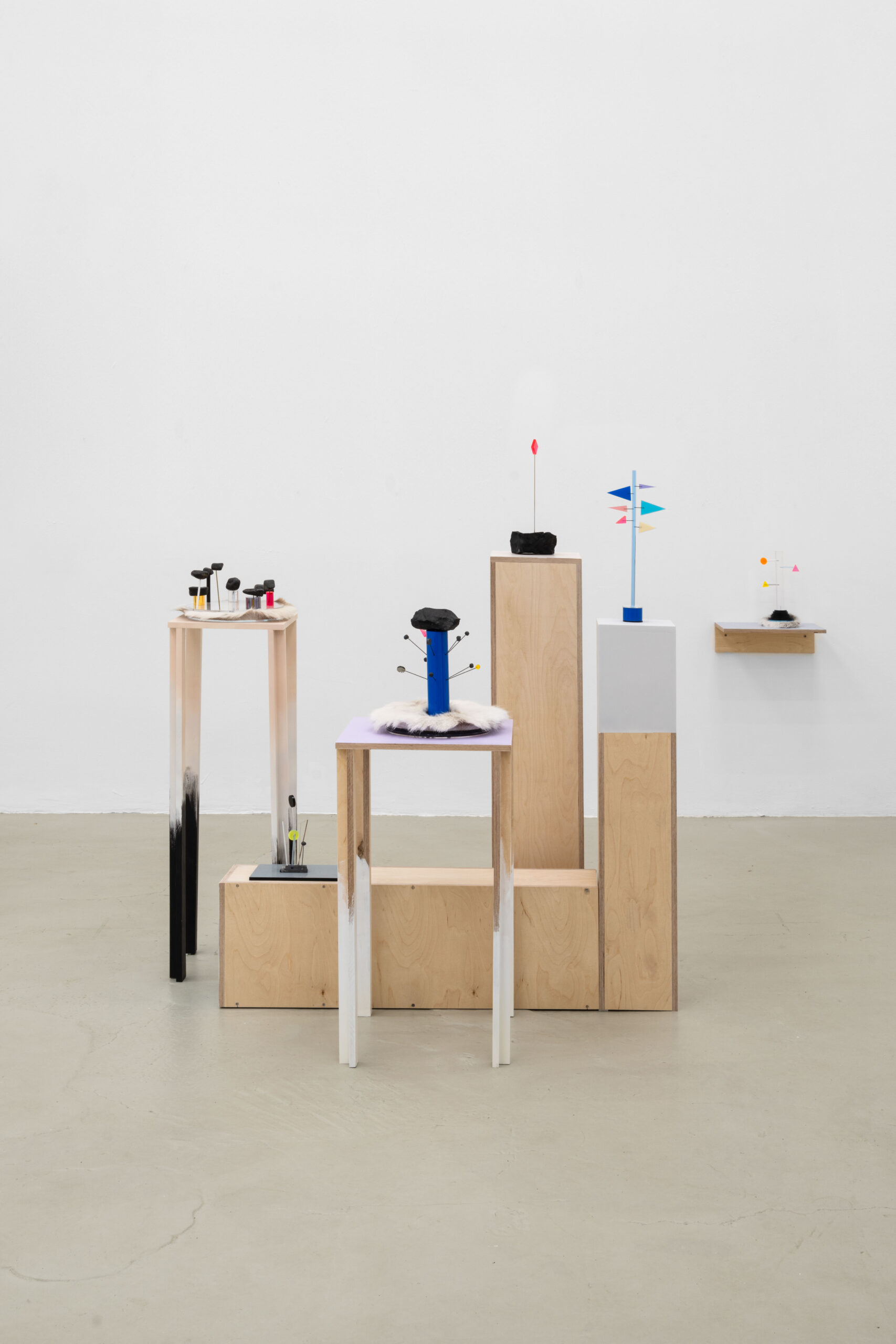
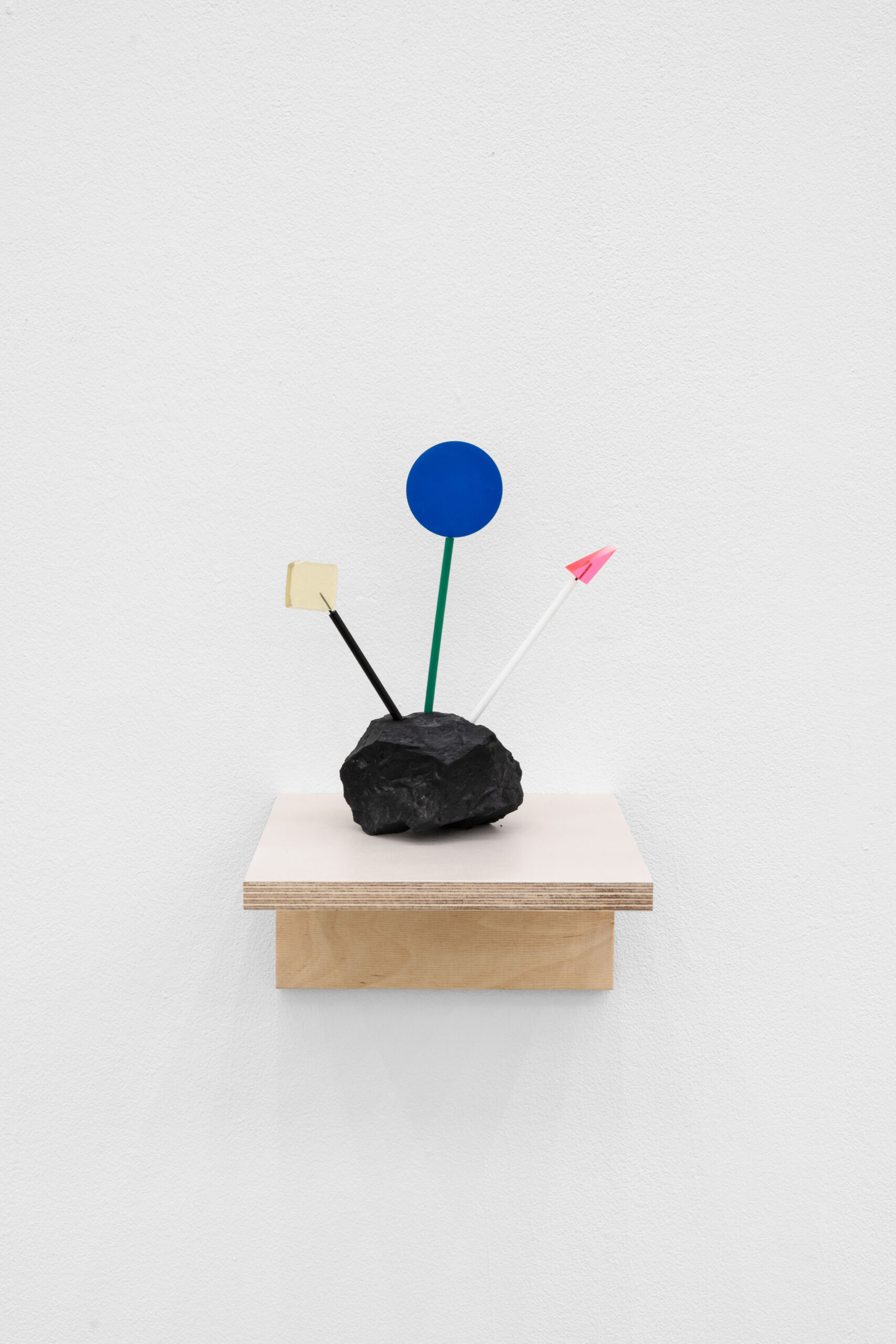
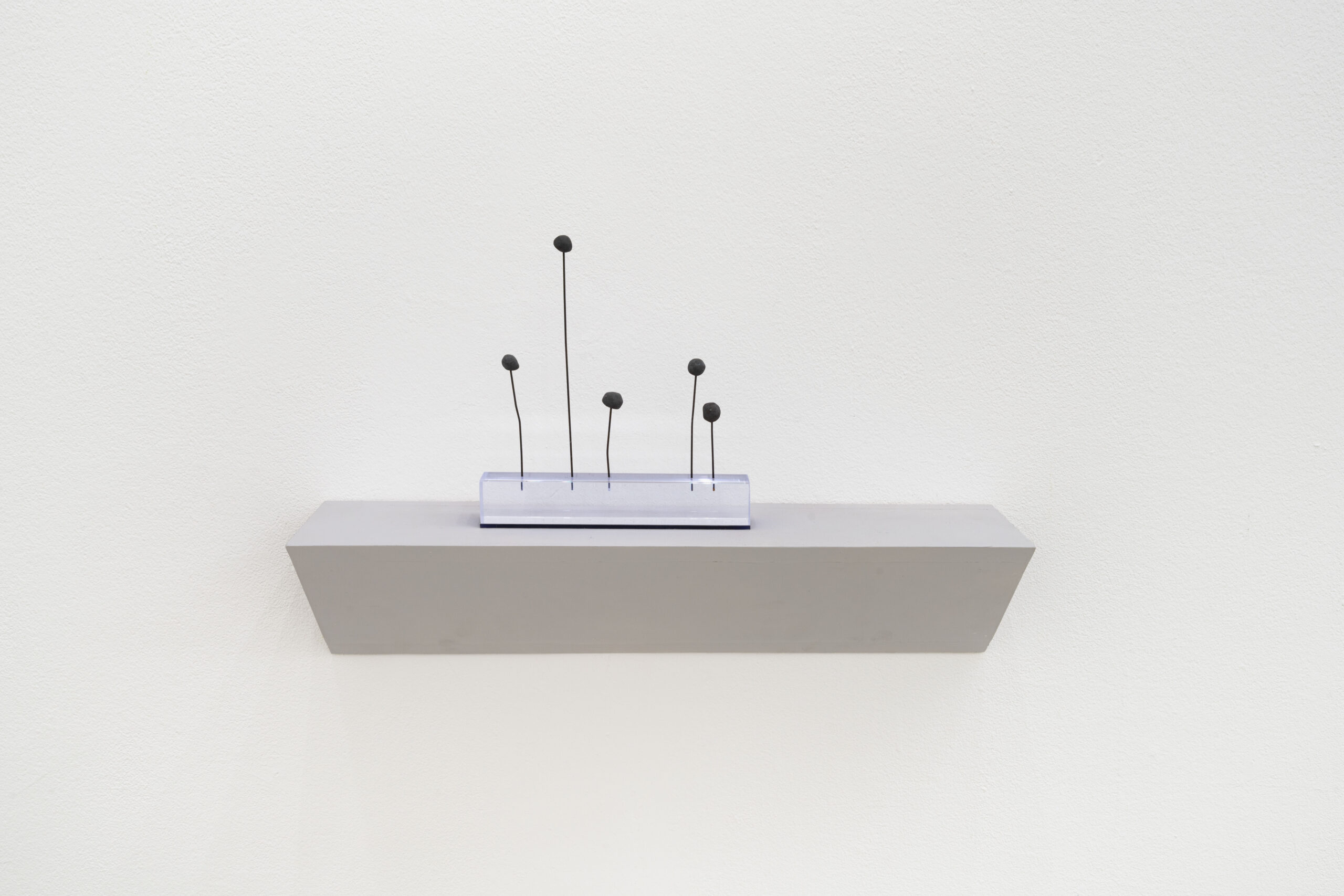
A similar tension appears within the sculptural “light objects”, assemblages constructed from neon and iridescent plastics combined with reindeer fur and iron ore collected in Kiruna. Their sharp geometric forms and high-visibility colours draw from the visual language of Arctic sportswear, ski equipment, emergency signalling devices, and survival technologies – objects designed to orient bodies within conditions of snow, darkness, and reduced visibility. Simultaneously synthetic and tactile, industrial and organic, the sculptures evoke forms of adaptation shaped by extreme environments while echoing both the chromatic intensity of the aurora and the illuminated mining landscape surrounding the city.
Processes of extraction and transformation recur elsewhere in Heide Nord’s hand-grown crystal works. Here, the logic of mining is subtly reversed. Rather than excavating minerals from the earth, crystalline structures are slowly cultivated through chemical accretion and pigment, as though matter itself were patiently painted into existence. Presented through looping photographic projections, these unstable formations hover between scientific experiment, hallucination, and landscape image – suspended between growth and simulation, materiality and apparition.
Underlying the exhibition is an ongoing interest in conflict not only as a political or ecological condition but also as a structure of perception. Signals break apart. Images become unstable. Heide Nord approaches these fractures not through claims of objectivity, but through accumulation, drift, and sensory encounter. The exhibition resonates with broader questions that continue through the artist’s parallel research and lecture projects, where satellites, transmission systems, and even animal perception become entangled. Moving between documentary material, speculative narration, and space imagery, these investigations ask how landscapes are sensed, controlled, translated, and imagined – and where interruptions within those systems might still open space for alternative ways of seeing.
Rather than resolving these contradictions, Parallel Time moves through them. The works appear as scattered points of orientation: fragments, reflections, and signals that attempt to navigate a terrain in continuous flux. Like shimmering stones in a tale, they do not offer a single clear route forward but moments of illumination – brief markers that catch the light and help trace a way through unfamiliar ground.
Elizabeth Gerdeman, 2026